What a Blended Family Taught Me About Being a Dad
Lessons about showing up as families, kids, and relationships change.
What I Learned About Showing Up, Letting Go, and Making the Time Count
When my second marriage began, I wasn't just getting married again.
I was becoming part of a blended family.
I had two children from my first marriage—a daughter and a son. My wife had two sons of her own. Together, we became a family of six: one girl, three boys, and two adults trying to figure out how all of the pieces fit together.
The kids weren't all the same age. They didn't have the same personalities. They didn't need the same things from us.
And they certainly didn't come with instructions.
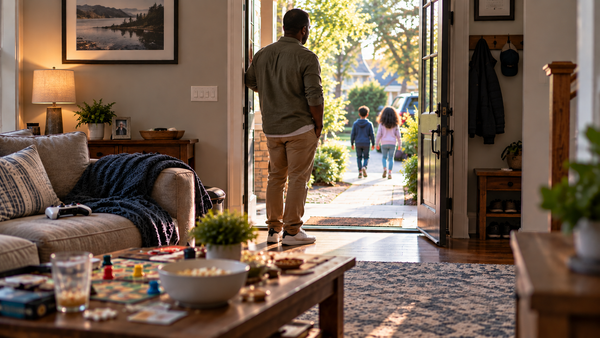
For years, our life included every-other-weekend custody, Wednesday visits, school schedules, holidays, vacations, dinners, birthdays, disagreements, inside jokes, and all the ordinary logistics that come with raising four kids across a blended family.
There were Christmas mornings and summer trips.
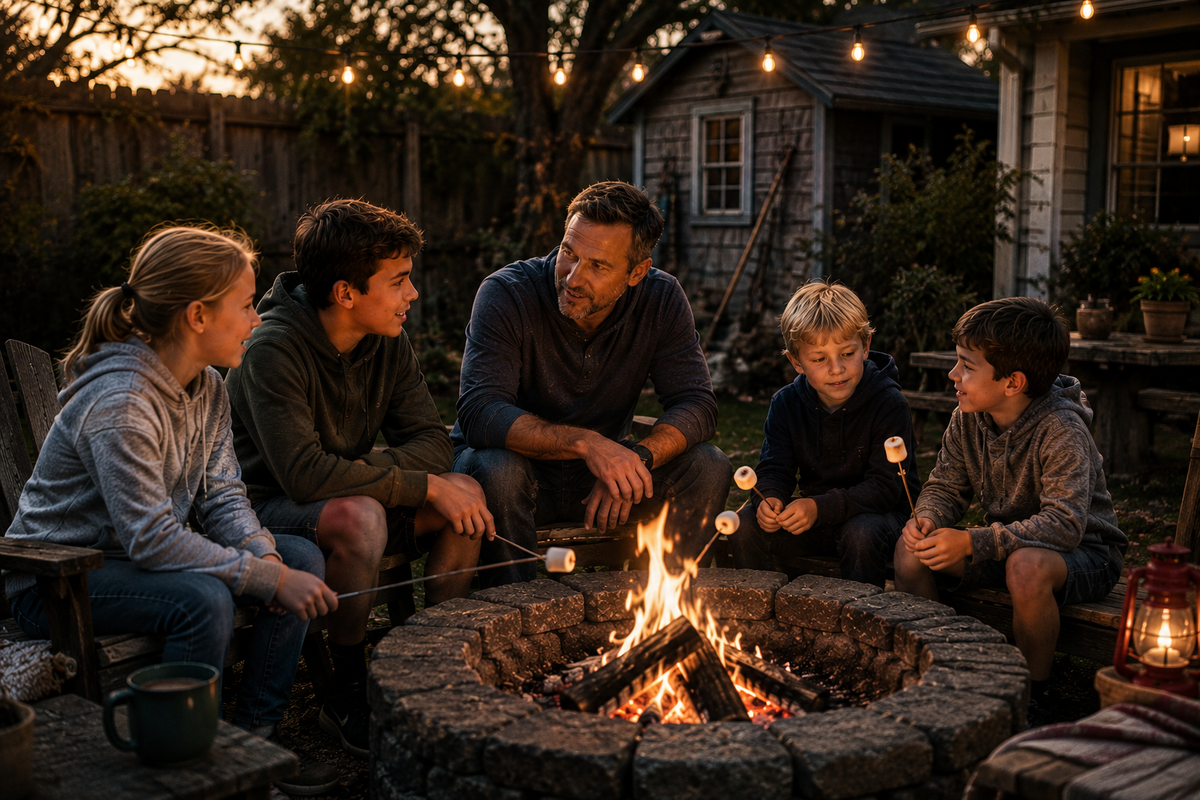
There were nights around the firepit.
There were rides to practices, dinners around the table, and plenty of time spent figuring things out as we went.
At times, we joked that we had our own version of The Brady Bunch.
It wasn't perfect.
It wasn't always easy.
But it taught me more about being a dad than I expected.
Four Kids Didn't Need the Same Dad
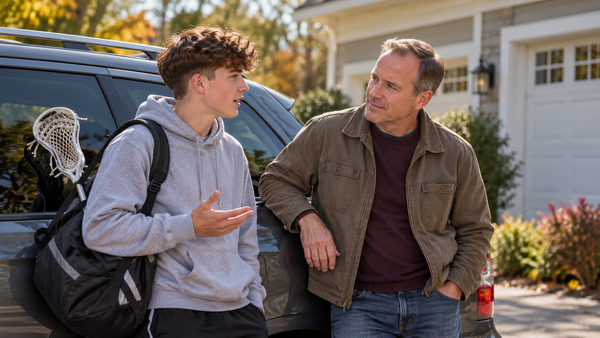
One of the first things I learned was that being there for four kids didn't mean giving all four of them the same version of me.
What worked with one didn't necessarily work with another.
One might want to talk.
Another might want to do something together without talking much at all.
One needed encouragement.
Another needed space.
Sometimes one of them wanted my help. Sometimes the best thing I could do was back off and let them figure something out themselves.
That sounds obvious when you write it down.
It didn't always feel obvious while we were living it.
With four kids at different ages and stages, I had to keep adjusting.
I wasn't raising four versions of the same child. I was getting to know four individual people.
And that meant learning that fairness didn't always look like sameness.
Sometimes the Parent Has to Change First
My younger stepson was almost four when I came into his life.
He was also autistic.
That brought a different set of experiences into our family and required me to learn things I hadn't needed to understand in quite the same way before.
Communication could look different.
Transitions could be difficult.
Something that seemed small to me could feel much bigger to him.
Expectations that worked perfectly well with another child didn't necessarily work for him.
There were times when my instinct was to focus on what I wanted him to do differently.
Over time, I learned to ask a different question:
What do I need to understand or do differently here?
That shift mattered.
It didn't mean there were no expectations or boundaries.
It meant recognizing that my way of communicating, explaining, preparing, or responding might need to change too.
And that lesson extended far beyond one child or one diagnosis.
Understanding a child sometimes requires changing yourself before asking the child to change.
The Relationship Has to Grow With the Child
One of the strange things about parenting is how quickly the version of your child standing in front of you changes.
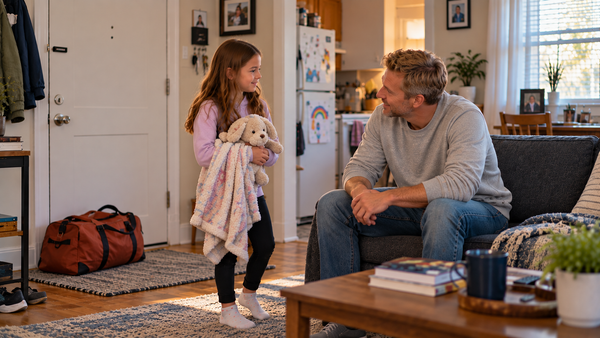
There was a time when spending time with my daughter might mean going to the American Girl store.
Years later, it meant helping her learn how to drive.
The activity changed because she changed.
The same was true with all four kids.
The things they wanted to do changed.
The conversations changed.
The amount of independence they wanted changed.
The way they needed me changed.
And sometimes I had to catch myself wanting to hold on to a version of the relationship that had already started evolving.
The activity changes as the child changes. The relationship needs room to change with them.
Being present isn't about recreating what worked five years ago.
It's about continuing to learn the person your child is becoming.
Ordinary Time Became More Important Than I Expected
When you're raising kids, it's easy to remember the bigger things.
Vacations.
Holidays.
Birthdays.
Special outings.
But when I think back on those years, some of the moments that stay with me aren't the ones that required much planning.
They're the ordinary ones.
Sitting around the firepit.
Driving somewhere together.
Making dinner.
Watching television.
Talking at the table.
Running errands.
Doing something simple because it was what made sense that day.
You can't always predict which moments your kids will remember.
And you can't manufacture meaning by making everything bigger.
Sometimes the things that become part of a family's story are the things nobody thought were particularly important while they were happening.
That changed the way I thought about time with my kids.
I became less interested in filling every available hour and more interested in being there for the hours we actually had.
An Ending Doesn't Erase What Came Before It
My second marriage eventually ended.
And when a marriage ends, a blended family can change with it.
Roles change.
Routines change.
Relationships can change.
Sometimes dramatically.
That's difficult to reconcile when you've spent years thinking of a group of people as a family.
But I've come to believe something that matters to me:
An ending can change what a family becomes without changing the fact that it was once a family.
Those years happened.
Those relationships mattered.
Those ordinary moments were real.
A later ending doesn't require me to rewrite everything that came before it.
Not Every Relationship Is Entirely Yours to Preserve
This was probably the hardest lesson.
I had been in my younger stepson's life since he was almost four.
We had years of ordinary life together.
Meals.
Vacations.
Holidays.
Car rides.
Backyard fires.
Jokes.
Arguments.
Routines.
All the things that accumulate when someone is part of your family for a long time.
After the marriage ended, that relationship changed too.
I haven't seen him in roughly three and a half years.
I don't know exactly how he understands what happened, and I don't want to pretend that I do.
What I do know is that I cared about him deeply and that the years I spent being part of his life mattered to me.
But caring about someone doesn't always give you control over whether a relationship continues.
That's a difficult thing to accept when you've spent years thinking of yourself as one of the adults responsible for showing up.
You can love a child deeply and still discover that not every relationship is entirely yours to preserve.
There are parts of fatherhood—and stepfatherhood—that effort alone can't control.
Sometimes you have to live with that without convincing yourself that what came before meant less.
What I Know Now
Looking back, blended-family life taught me that being a dad has much less to do with getting everything right than I once thought.
You learn the kid in front of you.
You adjust.
You make mistakes.
You try again.
You give one child more structure and another more room.
You listen when they want to talk.
You learn not to force it when they don't.
You discover that ordinary moments can matter as much as the ones you spent weeks planning.
And eventually you realize that showing up isn't one grand gesture.
It's something that accumulates.
A conversation.
A ride somewhere.
Dinner.
A joke.
Helping with something.
Sitting nearby.
Remembering what they told you last time.
Being there again.
Not every one of those moments becomes a memory.
It doesn't have to.
Together, they become a relationship.
Why I Created Every Other Weekend
My experience isn't every dad's experience.
Not every father is divorced.
Not every family is blended.
Not every dad sees his kids on an every-other-weekend schedule.
And even among those who do, the circumstances can be completely different.
Every Other Weekend wasn't created because I think I figured fatherhood out.
I created it because I learned how easy it is to put pressure on limited time.
To wonder whether you're doing enough.
To think you need a bigger plan.
A better activity.
A more memorable weekend.
But the years that mattered most to me weren't built entirely from big moments.
They were built from showing up, paying attention, adjusting when something stopped working, and doing the best I could with the time that was actually in front of me.
That's the idea behind EOW.
Not perfect weekends.
Not trying to squeeze a childhood into a custody schedule.
And not pretending every family looks the same.
Just practical ways to remove some of the pressure and make it easier to be present for the relationship you're building.