The Quiet House After They Leave
A grounded approach to the first few hours after your kids leave and the house suddenly feels different.
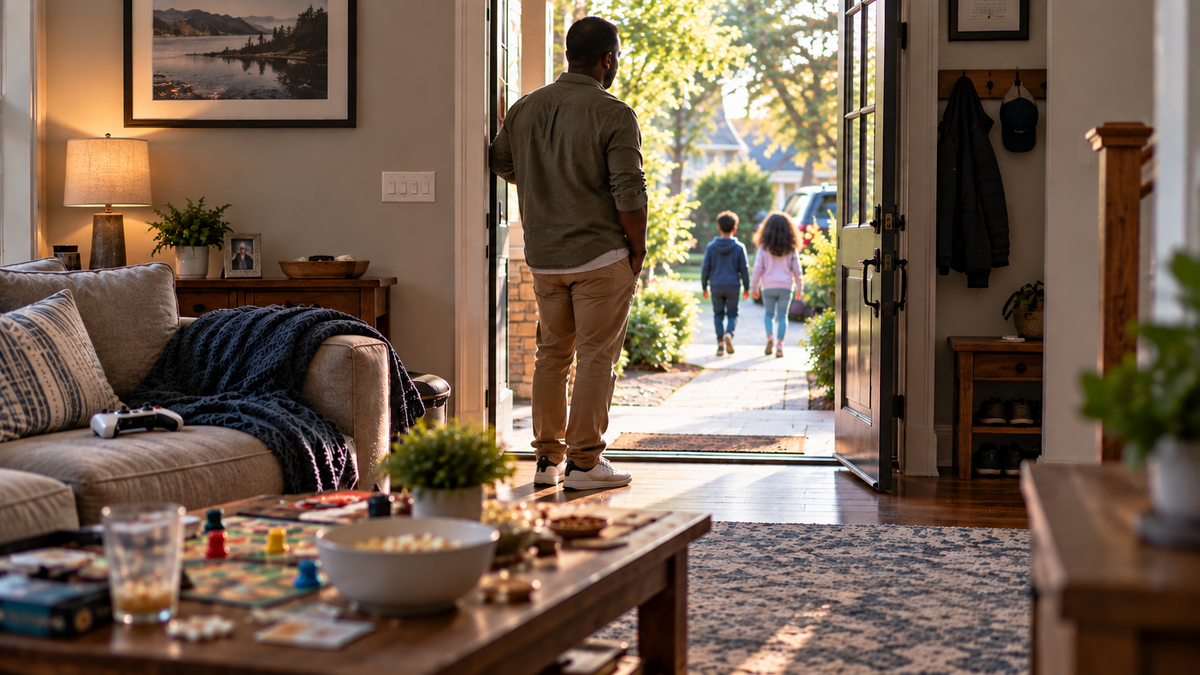
A simple way to ease the transition when parenting time ends and the house gets quiet.
One minute, the house is full.
Shoes by the door. Something playing on the TV. Someone asking what's for dinner. A half-finished drink sitting somewhere it probably shouldn't be.
Then they leave.
And the house gets quiet.
If your time with your kids follows a schedule, you may know that transition well. The weekend ends, they head back to their other home, and suddenly you're standing in the same house that felt completely different an hour ago.
What happens next isn't the same for every dad.
Maybe you miss them immediately.
Maybe you're exhausted and appreciate the quiet.
Maybe you start cleaning, turn on the TV, head out, or move right into whatever comes next.
Or maybe those first few hours are harder than you expected.
There isn't a right way to feel when the house gets quiet.
But it can help to have a way to move through the transition.
The Change Can Feel Bigger Than the Clock Says
Your kids leaving doesn't just change who's in the house.
It changes the rhythm of the day.
For however long they were with you, part of your attention was organized around them. Meals. Rides. Plans. Conversations. The ordinary interruptions that come with having your kids around.
Then all of that stops at once.
You're still Dad. But the immediate job of being Dad has changed.
That shift can feel strange even if you've been doing this for years. And if you're early in a new parenting schedule, it may feel especially abrupt.
You don't necessarily need to fix it.
Sometimes it helps simply to recognize what's happening:
You're changing gears.
Give Yourself a Landing Spot
It can be tempting to solve the quiet immediately.
Make plans. Start a project. Turn something on. Find something productive to do.
Maybe that's exactly what you want.
But you don't have to fill the space just because it opened up.
Instead, try giving yourself one familiar landing spot after the kids leave.
Take a walk.
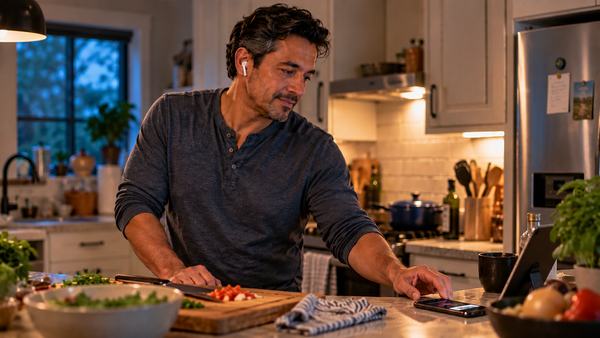
Make something to eat.
Clean up while listening to music.
Watch something you've been saving.
Call somebody.
Sit outside for a while.
Or simply give yourself some time before deciding what comes next.
The activity isn't really the point.
Having something familiar can make the shift feel less abrupt.
You Don't Have to Earn the Time
The hours after your kids leave can come with another kind of pressure:
I should be doing something with this time.
Catching up around the house. Working. Exercising. Running errands. Getting ahead before the kids come back.
Sometimes that's useful.
But time without your kids doesn't automatically become a productivity assignment.
You're allowed to have an ordinary night.
Make dinner. Watch a movie. Go somewhere. See someone. Do something you enjoy. Or do very little.
You don't have to prove you're using the time well.
Let the Quiet Become Part of the Rhythm
With time, the space between parenting time may start to feel more familiar.
That doesn't mean you have to prefer it.
And it doesn't mean you stop missing your kids.
Your relationship with them doesn't switch off when they're somewhere else.
But you don't have to spend all of the time they're gone waiting for them to come back, either.
Both things can be true.
You can miss having them there.
And you can be okay in the quiet.
When the House Gets Quiet
The next time your kids leave and the house suddenly feels different, don't worry about handling the transition perfectly.
Give yourself somewhere to land.
One familiar routine.
One thing you enjoy.
One plan if you want one.
Or a little time before deciding what comes next.
And then let the rest of the time be whatever it needs to be.
Find Your Rhythm
Every Other Weekend is about more than planning the next weekend. It's about building a rhythm that works across the time you're together and the time you're apart.
Get practical ideas, Weekend Blueprints, and resources designed for real dads, real schedules, and real life.