The Weekend That Doesn’t Need to Be Perfect
A simple plan for letting go of the pressure to make every moment special.
A Simple Plan for Taking the Pressure Off
Time Needed: Flexible — 1–2 hours or woven into the weekend
Energy Level: Low–medium
Cost: Low
Best For: Dads feeling pressure to make every moment count
When time with your kids feels limited, it’s easy to put pressure on yourself.
Did I plan enough?
Are they having fun?
Should we be doing more?
Am I making the most of our time?
Those questions can turn an ordinary weekend into something you feel responsible for getting exactly right.
You don’t.
Your kids don’t need every hour together to feel special.
Sometimes the things that become meaningful are the things you simply keep coming back to.
What This Helps With
There’s a difference between being intentional with your time and putting pressure on every moment to matter.
One gives the weekend some direction.
The other can make you feel like you’re constantly evaluating whether you’re doing enough.
This Blueprint is about taking some of that pressure off.
Instead of trying to create the perfect weekend, choose something simple enough to become familiar.
Something your kids can recognize as:
“This is something we do together.”
Anchor Activity: Start a Simple Weekend Tradition
Choose one ordinary thing you can come back to.
It doesn’t need to happen every weekend or follow a rigid schedule.
It just needs to be simple enough that you can do it again.
That could be:
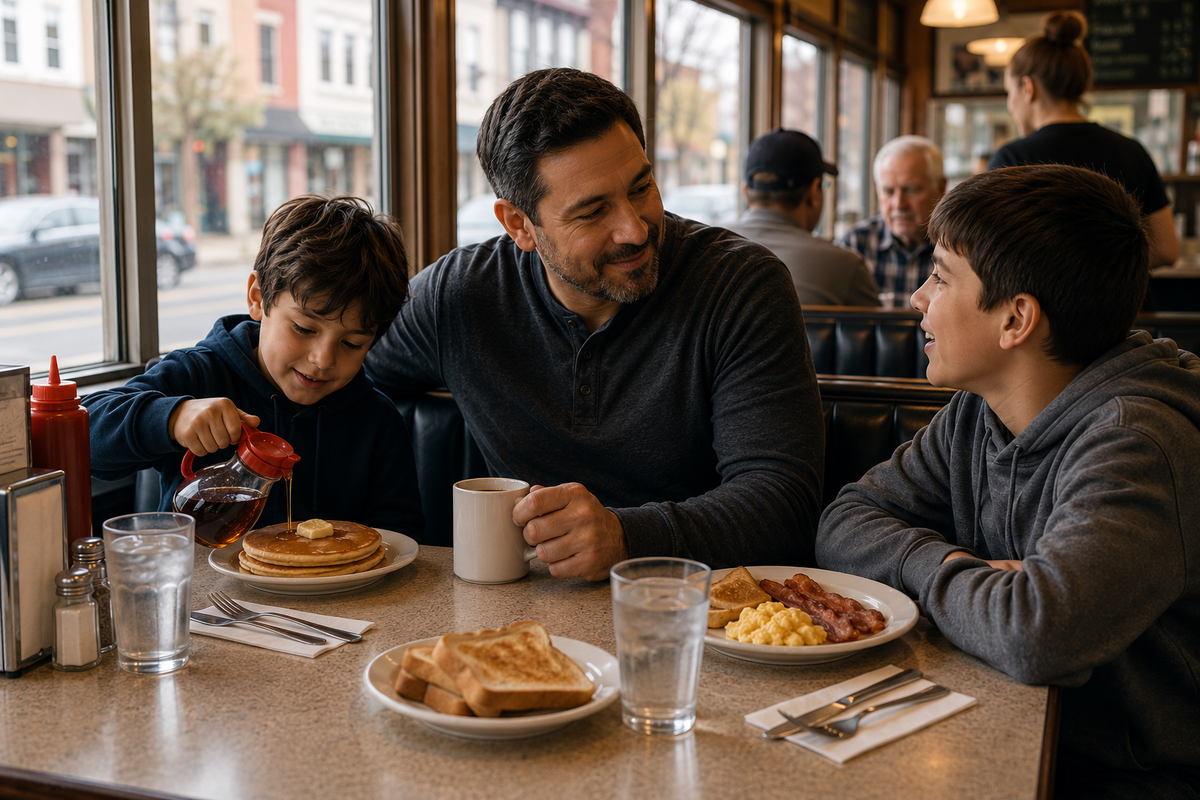
- Breakfast at the same diner
- A walk through town
- Browsing a bookstore or favorite shop
- Getting the same favorite treat
- Visiting a farmers market
- Returning to a park everyone likes
- Making the same breakfast together at home
The activity itself isn’t what makes it a tradition.
Familiarity does.
Over time, the diner becomes our diner.
The walk becomes our walk.
The little thing you keep doing together starts to feel like part of your time together.
You don’t have to manufacture a memory.
Just give ordinary moments a chance to become familiar ones.
Backup Plan: Keep One Familiar Piece
A tradition doesn’t have to happen exactly the same way every time.
If the full version feels like too much, keep one recognizable piece.
If you usually go out for breakfast, make pancakes at home.
If you usually browse a bookstore and get a treat afterward, just get the treat.
If you usually take a walk through town, take a shorter walk closer to home.
If you usually make something together, choose the easiest version.
You’re not trying to preserve every detail.
You’re keeping a small piece of something that belongs to your time together.
Traditions don’t need perfect execution either.
Zero-Prep Option: Let Ordinary Time Be Ordinary
Not every moment needs an activity attached to it.
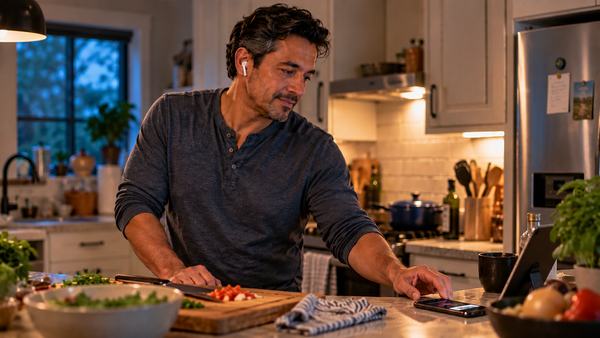
Make dinner.
Watch something together.
Look through old photos.
Listen while they tell you about something they’re interested in.
Sit in the same room while everyone does their own thing.
Drive somewhere and talk about whatever comes up.
There doesn’t always need to be a lesson, an experience, or a memory being deliberately created.
Sometimes it’s just Tuesday-night-level ordinary—even if your time together happens to fall on a weekend.
Let it be ordinary.
Reality Note
Your kids may not react to a tradition as though it means anything to them.
They might complain about the diner.
They may barely acknowledge the routine.
Something they loved six months ago may suddenly feel boring.
And eventually, they may want to do something different.
That’s okay.
A tradition should give your time together familiarity, not become another obligation.
Pay attention to what still works.
Let routines change as your kids change.
The goal isn’t to preserve the tradition forever.
It’s to create a sense of familiarity while it still belongs to all of you.
Why This Works
Kids often remember things adults barely notice.
The same breakfast.
The same joke.
The same chair they always sit in.
The snack that’s usually in the cabinet.
The place you stop on the way home.
Those small repetitions can create something bigger than the activity itself.
Familiarity.
A sense of belonging.
A sense that there are things they can count on when they’re with you.
You don’t have to make those moments important while they’re happening.
Sometimes repetition does that work for you.
The Point
A meaningful weekend doesn’t have to look meaningful every minute you’re living it.
There can be boring stretches.
Someone can be in a bad mood.
Breakfast can just be breakfast.
The kids can spend time doing their own thing.
And the weekend can still matter.
Keep showing up.
Keep a few things familiar.
Leave room for ordinary life to happen around you.
You don’t need to turn every moment together into something more than it is.
Get the Next Blueprint
Want more practical ways to make the time you have count?
Get new Weekend Blueprints, connection ideas, and simple plans from Every Other Weekend.